Wagon
Cabin

Home
Bluff Fort
The Trail
The Foundation
Contact Us
Donate


Image Disclaimer

Click on small image to view details

Other than images noted below all images are courtesy of Lamont Crabtree
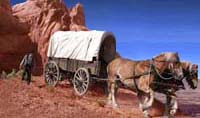
-Covered Wagon up Cottonwood Hill, State of Utah Board of Education
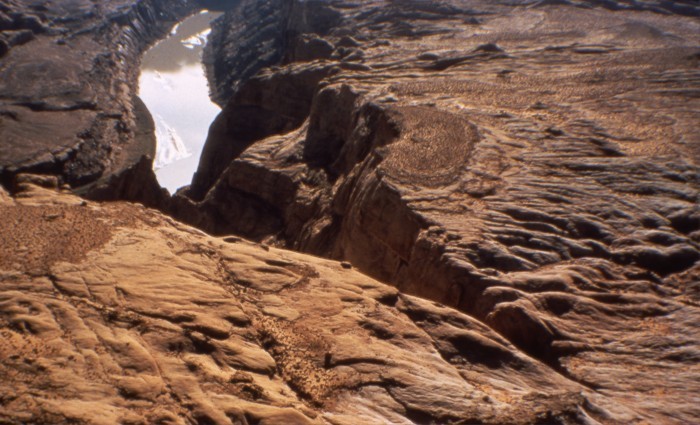
-Hole-in-the-Rock Crevice Prior to Lake Powell, Lynn Lyman


1: San Juan Hill

The Hole-in-the-Rock Trail

Near starved oxen and horses quivered, fell, took to convolutions and even died as they pulled covered wagons up the steep, solid rock slope of San Juan Hill. San Juan Hill was the last major barrier for 70 families of the San Juan Mission / Hole-in-the-Rock Expedition who were answering a call from the Church of Jesus Christ of Latter-day Saints to establish a settlement in the Four Corners region. In reaching the area, these Mormon pioneers built a wagon trail through the Colorado River gorge, descended crevices and crossed deep ravines, mountains, deserts and forests - terrain so inhospitable many of their own scouts deemed it as impassable.

2: Hole-in-the-Rock Crevice

The 250-mile trek took twice as long as it took some the same participants to pull handcarts 1300 miles to the Salt Lake Valley. The Hole-in-the-Rock journey stands alone in its difficulty in the annals of western pioneering. With many sections of the trail blasted out of solid sandstone, nearly no vegetation and little modern development, the Hole-in-the-Rock Trail is very well preserved. Many of the trail’s most challenging sites are as the pioneers left them.


Visiting the Trail

3: Cottonwood Hill, the pioneer’s path out of the Colorado River gorge

Walking where the Hole-in-the-Rock pioneers once walked and seeing first hand theformidable obstacles and challenges is an experience never to be forgotten. This web site will eventually be expanded to include detailed trail information.

4: Slick Rocks

In the meantime, we will answer all inquires pertaining to specific sections of the trail. With respect to the Hole-in-the-Rock crevice, access to it can be gained via a boat on Lake Powell or by following the 65-mile-long Hole-in-the-Rock Trail road which is now part of the National Golden Staircase Monument.

5: The Hole-in-the-Rock Crevice, the only feasible path to construct a wagon road down the 1300’ cliff face of the Colorado River

The road originates near Escalante, Utah. The first 55 miles of this dirt road is well maintained but only high ground clearance vehicles are recommended. The last ten miles to the Hole-in-the-Rock requires four-wheel drive and can be technically difficult in a few places. Please contact the Golden Stair Case National Monument for current road conditions. Summer temperatures can be very high; ample water is essential.


6: Escalante Desert
7: Dance Hall Rock
8: The Hole-in-the-Rock Crevice Escalante Desert - Kaiparowits Plateau
9: The initial drop
10: The area of the Chute
11: Clay Hills
12: The Cedars
13: The Twist


Home
|Bluff Fort|The Trail|HIR Foundation|Contact Us|Donate
© Copyright Hole in the Rock Foundation ® 2007 web design by red Olive


The Hole-in-the-Rock Foundation - Preserving the History and Sharing the Legacy

click for larger map


Descriptions of Trail photos.

1: San Juan Hill
Their last major obstacle

2: Hole-in-the-Rock Crevice, Colorado River gorge prior to Lake Powell

3: Cottonwood Hill, the pioneer’s path out of the Colorado River gorge.
Required more blasting than did the Hole-in-the-Rock

4: Slick Rocks
One of a series of switchbacks blasted out of sandstone to make a path down from Grey Mesa

5: The Hole-in-the-Rock Crevice, the only feasible path to construct a wagon road down the 1300’ cliff face of the Colorado River

6: Escalante Desert
Pioneer route along the base of the Kaiparowits Plateau

7: Dance Hall Rock
Natural amphitheater which was used for dances and social activities

8: The Hole-in-the-Rock Crevice
Escalante Desert - Kaiparowits Plateau in the background

9: The initial drop ate the top of the Hole-in-the-Rock Crevice
So steep that ten men were required to hold the wagons back with ropes

10: The area of the Chute

11: Clay Hills

12: The Cedars
To avoid Grand Gulch the pioneers cut a path through 20 miles of Junipers

13: The Twist